


You asked for it and we listened. In this column, we ask operators of all sizes and from all walks of the industry a question about their business and report their answers so you can assess how your own company compares to your peers. If you would like to participate, please email Rob Smentek at
TOPIC: What KPIs are you using to evaluate your best affiliate partners?
 We try to keep things straightforward and practical. For us, it really comes down to reliability, communication, and how easy they are to work with overall. We look at things like whether trips are handled on time, if the chauffeurs are professional and creating a great client experience, and if all the details of each reservation are executed correctly. Just as important is communication, especially when something changes at the last minute. Being able to quickly get a hold of someone and have confidence that they will respond and take action makes a big difference in day-to-day operations.
We also pay close attention to billing accuracy and consistency, along with how often we are able to confidently send repeat business their way. At the end of the day, our strongest partners are the ones who feel like a seamless extension of our team, people we know we can rely on without hesitation. More than anything, I value integrity. Working with partners who are honest, dependable, and committed to doing the right thing goes a long way in building long-term, successful relationships.
Kirk Bagger, Corporate Travel Manager & Founder
Captains Car Service in Cleveland, Ohio
 First thing we need to work on as an industry is removing the word "affiliate" from the conversation; we all work as "partners" first. Our national global partners have to understand that they are a part of a relay race that includes my team, their team, and other partners. When it comes to running a relay race, every team member has a responsibility to connect to the other via the passing of the baton. The goal is to finish the race, hopefully in first, but if not first… get across the finish line!
In our industry, to complete the chain of service for the customer (in this reference, the baton) all our partners need to be able to run their leg of the race to get the baton across the finish line. But, when someone on the team (aka partner) drops the baton, they don't run fast enough, or don't show up mentally, the whole team loses! It is imperative that all our partners understand that goal number one is completing the race without dropping the baton! When vetting our partners, my team is not looking for false promises of newest vehicles, superior training, cheapest rates, and top technology. We are looking for partners that prioritize customer service and quality control first—period! We can figure everything else out as long as they are focused on supporting us and our customers day in, day out. Some of our best global partners have older vehicles, have old school ways of doing business, but at the end of the day, they are amazing at giving the best service possible through both their frontline and back-office staffing. Partners last, affiliates come and go!!
Michael Barreto, President
Metropolis Passenger Logistics in Essington, Pa.
 When evaluating our affiliate partners, we focus on a combination of operational consistency, communication, and alignment with our service standards. Some of the key KPIs we track include:
- On-time performance (both pickup and drop-off), as reliability is critical in our line of work
- Chauffeur quality and professionalism, including presentation, communication, and overall client experience
- Response time and communication efficiency, especially for last-minute updates or changes
- Accuracy in billing and rate consistency, ensuring transparency and avoiding post-service discrepancies
- Client feedback and issue resolution, including how quickly and effectively problems are handled
- Operational flexibility, particularly during high-demand periods or complex, multi-day events
Beyond the numbers, we also evaluate how well partners align with our mindset, attention to detail, proactive communication, and a genuine understanding of luxury service expectations.
At the end of the day, our best partners are those who consistently make us look good in front of our clients, regardless of the market or complexity of the request.
Fernando Carlison Jr., CEO
Mundi Worldwide in Deerfield Beach, Fla.
 We evaluate affiliate partners with a disciplined and uncompromising standard: Safety and compliance come first— no exceptions. Every affiliate partner is thoroughly vetted for licensing, insurance, chauffeur qualifications, and vehicle condition before they ever represent our brand. Protecting our clients and our reputation is non-negotiable. From there, we focus on the fundamentals that define a best-in-class operation: on-time performance, trip execution and completion, and chauffeur professionalism. Consistency is critical in our business, so we measure performance across every trip, especially under pressure.
Equally important is communication and operational alignment. Our strongest affiliate partners operate as a seamless extension of our team; maintaining real-time communication with dispatch, executing to our standards without friction and ensuring every movement runs exactly as planned.
In large-scale bus movements and complex logistics, we strategically utilize a select group of affiliate partners who have proven they can perform at our level. These movements require precision, coordination and depth of resources and our network allows us to scale while maintaining full operational control and accountability.
For contracted shuttle programs and school/educational transportation, we keep operations entirely in-house due to the compliance, safety and contractual requirements involved. This ensures consistency, accountability, and full alignment with the standards our clients expect.
Ultimately, our best partners are the ones we never have to think twice about. They deliver at the same high standard we hold ourselves to, every single time. In this business, that level of discipline is what separates a vendor from a true affiliate partner.
Johan DeLeeuw, COO & Vice Chairman
Cooper Global Chauffeured Transportation in Atlanta, Ga.
 We have long adhered to a standardized report card that is viewed once per quarter for any affiliate who provided service during the quarterly evaluation period. Every trip performed by an affiliate is documented based on the following criteria:
On-time performance (OTP):
- Pickup on-time rate: % of trips where chauffeur arrives/spots within a defined window of 10-15 minutes early
- Drop-off timeliness: Especially critical for airport departures or events
- Flight tracking accuracy: % of airport pickups that were adjusted for delays
Benchmark: 98-99% OTP
- Trip acceptance rate and performance
- Trip acceptance rate: % of jobs accepted vs. offered
- Cancellation rate: Last-minute cancellation of trips
- Recovery time: How quickly was a correction made if something went wrong
- No show: Automatic termination from program unless severe extenuating circumstance existed
Benchmark: Cancellation rate under 1-2%, missed trips: zero tolerance
- Chauffeur quality and professionalism
- Customer satisfaction: Post-ride client survey rating (Scale of 1 to 5)
- Complaint rate: Issues per quarter documented
- Chauffeur certification compliance: Affiliate must complete background checks and maintain our dress code standards
- Meet and greet execution: Proper professional signage but be used displaying our brand or NO BRAND + curbside vs. inside pickup compliance
Benchmark: Post-ride client survey rating of 4.7 to 5.0. (Scale of 1 to 5) - Complaints: <1 per 100 trips
- Vehicle standards
- Vehicle age: (Maximum of 3-5 years depending on class)
- Cleanliness score: Interior/exterior inspections mandatory before service
- Vehicle class accuracy: Correct vehicle dispatched vs. booked
- Mechanical reliability: Breakdowns per 100 trips
Benchmark: Vehicle accuracy: 100% cleanliness, post-ride client survey rating of 4.8 to 5.0. (Scale of 1 to 5)
- Communication and dispatch responsiveness
- Affiliate response time: Time to confirm a trip request
- Status update compliance: Chauffeur “on location,” “passenger onboard,” etc.
- 24/7 availability: Dispatch accessibility across time zones
- Issue escalation time: How fast problems are reported and resolved
Benchmark: Confirmation within 15-30 minutes, real-time status updates 100% compliance
- Technology integration
- System integration compatibility: API or platform connectivity (e.g., GNET, Santa Cruz)
- GPS tracking availability: Must have live trip visibility
- Automated status updates: Preferred
- Confirmation accuracy: Correct passenger, billing, and itinerary info
Benchmark: Full trip visibility: 100% with minimal manual intervention
- Financial accuracy and billing
- Billing accuracy rate: Correct invoicing first time and within 24 hours of ride completion (weekends exception)
- Dispute rate: % of trips requiring billing correction
- Rate agreement: No surprise charges!
Benchmark: billing accuracy: 99%+, disputes: <1%
- Compliance and insurance
- Insurance coverage verification: Up-to-date COI
- Local licensing compliance: Permit, airport authority
- Safety record: Incidents per 1000 jobs farmed
Harry Dhillon, President
Ecko Worldwide Transportation in Santa Clara, Calif.
 We assess our affiliate partners based on a combination of operational excellence, consistency, and alignment with our service standards. The primary KPIs we focus on include on-time performance, quality of communication, chauffeur professionalism, vehicle condition, and overall client satisfaction.
We also place significant emphasis on responsiveness, accuracy in trip execution, and the ability to maintain a seamless experience for our clients, regardless of location. As a company with a global network, it is essential that our affiliates consistently deliver the same level of service our clients expect in Miami.
Long-term reliability, attention to detail, and a shared commitment to excellence are the key factors that define our strongest partnerships.
Lenin Fraga, CEO & Founder
American Transportation & Limo Service in Miami, Fla.
 Though there are many things that we look for while assessing an affiliate’s performance, here are a few of the ones that we find most important: Accepting the trip in a timely manner, supplying chauffeur details, and then billing the trip promptly. We measure reported service complaints as a percentage of rides performed and review in detail if the service-related incident percentage is higher than our benchmark. Then, the biggest thing is the way the affiliate communicates. Are they responding right away when an issue is reported, or a billing question arises? The time it takes us to resolve a customer’s issue can often sway the overall feeling the customer walks away with.
Matt Greene, Vice President, Operations
Dav El/BostonCoach in Everett, Mass.
 Unfortunately, for us, evaluating affiliates is not a data-driven qualifier. It's the look, feel, and communication that makes the difference. These are the things I look for:
- Does one of my trusted affiliates recommend them?
- How often does their name come up in that market?
- Have they invested the time to attend shows and meet others?
- What level of service do others say they provide (all companies are NOT the same)?
- Do they need constant hand holding?
- Do they communicate well (changes, driver info, issues, problems, etc.)?
- Are they HONEST about their services and abilities?
- Do they have a back-up plan when things change?
- When things change are they pro-active and honest about how they are handling it (I/Os?)?
- Do I FEEL confident that they can do the job?
- Do I talk with owner/affiliate manager or a random different dispatcher when I call?
- Do my clients and other affiliate clients give them a good review?
Thomas Halsnick, CEO & Owner
Walsh Chauffeured Transportation in Tampa, Fla.
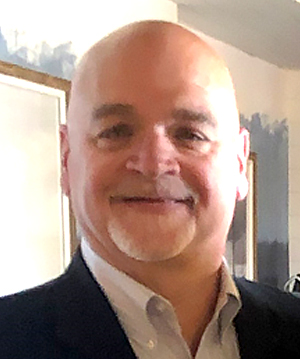 Selecting an effective affiliate partner is much like hiring an employee who will represent your company at the highest level. Proper vetting should be the first step in the selection process.
Begin with consulting your local and state industry associations for recommendations from members who have had strong experiences with affiliates in the market where you intend to operate. Once potential partners are identified, schedule time to speak with them directly and, when feasible, visit their operation in person.
Collaborate with association partners throughout the vetting and onboarding process to help ensure smooth execution, maintain service standards, and create an efficient experience for all parties involved.
Len Joseph, President
On The Town Limousines in Frederick, Md.
 We evaluate our best affiliate partners through a mix of performance, reputation, service quality, and alignment with our brand values.
Key KPIs we use include:
1. Industry commitment and reputation:
- Active involvement in the local tourism and hospitality industry
- Recognized as a trusted voice in their destination
- Positive reputation among hotels, venues, and suppliers
2. Service standards and client experience:
- Ability to deliver the same first-class standards we provide in Puerto Rico
- Client satisfaction scores and repeat business
- Response time, professionalism, and consistency of execution
3. Leadership and ownership engagement:
- Direct owner involvement and accountability
- Personal relationship with ownership to ensure shared vision
- Commitment to long-term partnership, not just transactions
4. Communication efficiency:
- Clear, proactive, and transparent communication
- Fast resolution times when challenges arise
- Strong coordination before, during, and after events
5. Business ethics and trust:
- Honest pricing and transparent billing
- Ethical business practices
- Reliability in honoring commitments
6. Operational performance:
- On-time delivery rates
- Accuracy in proposals and confirmations
- Crisis management effectiveness when unexpected issues happen
For us, numbers matter—but character, standards, and trust matter more. We are placing 30 years of reputation and excellent service in their hands, so every affiliate must protect and elevate that standard.
Robert Rodríguez, President & CEO
First Class Destination Solutions in Carolina, Puerto Rico
 The first thing we consider for affiliates is whether the potential partners is a member of the NLA. Second, what software are they using? And third is their online reviews. Last, we evaluate how good is their communication via email.
Since we play on both sides of the field—we send and receive trips—we expect the company that we choose to be an extension of us. Asking the client for a review or even comping the next personal trip for the partner to get some feedback is also very important. The main thing we consider is that they follow the same discipline as us.
Jess Sandhu, Director of Operations
A&A Limousine & Bus Service in Kenmore, Wash.
 Our partner quality is assessed across the entire service cycle. From booking through to invoicing, each step contributes to the overall standard of delivery. Beyond industry standards, we focus on key indicators that help maintain a high level of quality:
1. Before the service:
- Availability and responsiveness in communication and booking confirmations
- Thorough service preparation to prevent operational issues
- Consistency of chauffeur and vehicle assignments
2. During the service:
- Execution in line with our operational processes and service standards
- Ability to adapt to changes in schedule
3. After the service:
- Post-service feedback and communication quality
- Client feedback
- Administrative follow-up and invoicing coordination
In the premium mobility segment, reliability goes beyond meeting standards. It relies on the ability to anticipate, adapt, and communicate proactively.
Khelil Slimani, Founder & Managing Director
Colonel Chauffeur in Paris, France
 We designed our KPIs to ensure high service quality, operational efficiency, and brand consistency.
On-Time Performance (OTP):
- Target: 98% or higher
- Measurement: Percentage of trips where the affiliate's chauffeur arrives on location at or before the scheduled time
- Why It Matters: Ensures reliability and client satisfaction
Customer satisfaction rating:
- Target: Average rating of 4.8+ out of 5
- Measurement: Post-trip surveys and client feedback
- Why It Matters: It Indicates service quality and professionalism
Booking accuracy:
- Target: 99% error-free bookings
- Measurement: Number of booking discrepancies (incorrect vehicle, wrong chauffeur details, etc.)
- Why It Matters: Ensures smooth service execution and minimizes complaints
Response time for dispatch and communication:
- Target: Response within 5 minutes
- Measurement: Time taken to confirm a ride request or respond to inquiries
- Why It Matters: Quick response times reduce operational delays and improve coordination
Chauffeur professionalism and appearance:
- Target: 100% compliance
- Measurement: Random audits, customer feedback, and internal review
- Why It Matters: Clients expect a luxury experience, and professionalism is a key part of brand reputation
Affiliate compliance with our service standards:
- Target: 100% compliance
- Measurement: Adherence to our policies, including signage, driver tracking via app, and uniform standards
- Why It Matters: Ensures consistency in service delivery regardless of location
Incident and complaint resolution time:
- Target: Issues resolved within 24 hours
- Measurement: Time taken to acknowledge and resolve client complaints or operational issues
- Why It Matters: Quick resolution minimizes client dissatisfaction and prevents negative experiences from escalating
Ride acceptance rate:
- Target: 90%+ acceptance rate
- Measurement: Percentage of farmed-out rides accepted vs. declined
- Why It Matters: A higher rate ensures reliability and prevents last-minute ride disruptions
Certificate of insurance and documentation compliance:
- Target: 100% up-to-date documentation
- Measurement: Regular audits to verify insurance coverage, permits, and legal requirements
- Why It Matters: Protects us from liability and ensures operational legitimacy
Reciprocity and business growth contribution:
- Target: 10%+ increase in farm-in work year-over-year
- Measurement: Volume of jobs referred back to A1A by affiliates
- Why It Matters: Encourages a strong, mutually beneficial relationship with affiliates
We review these KPI’s weekly and provide input to management at the weekly incident number meeting.
Rick Versace, President & CEO
A1A Global Ground in Boca Raton, Fla.
We’ve loved hearing your answers to our benchmarking questions—but we always welcome suggestions for future topics, too!
Send an email to
[05.26]

