

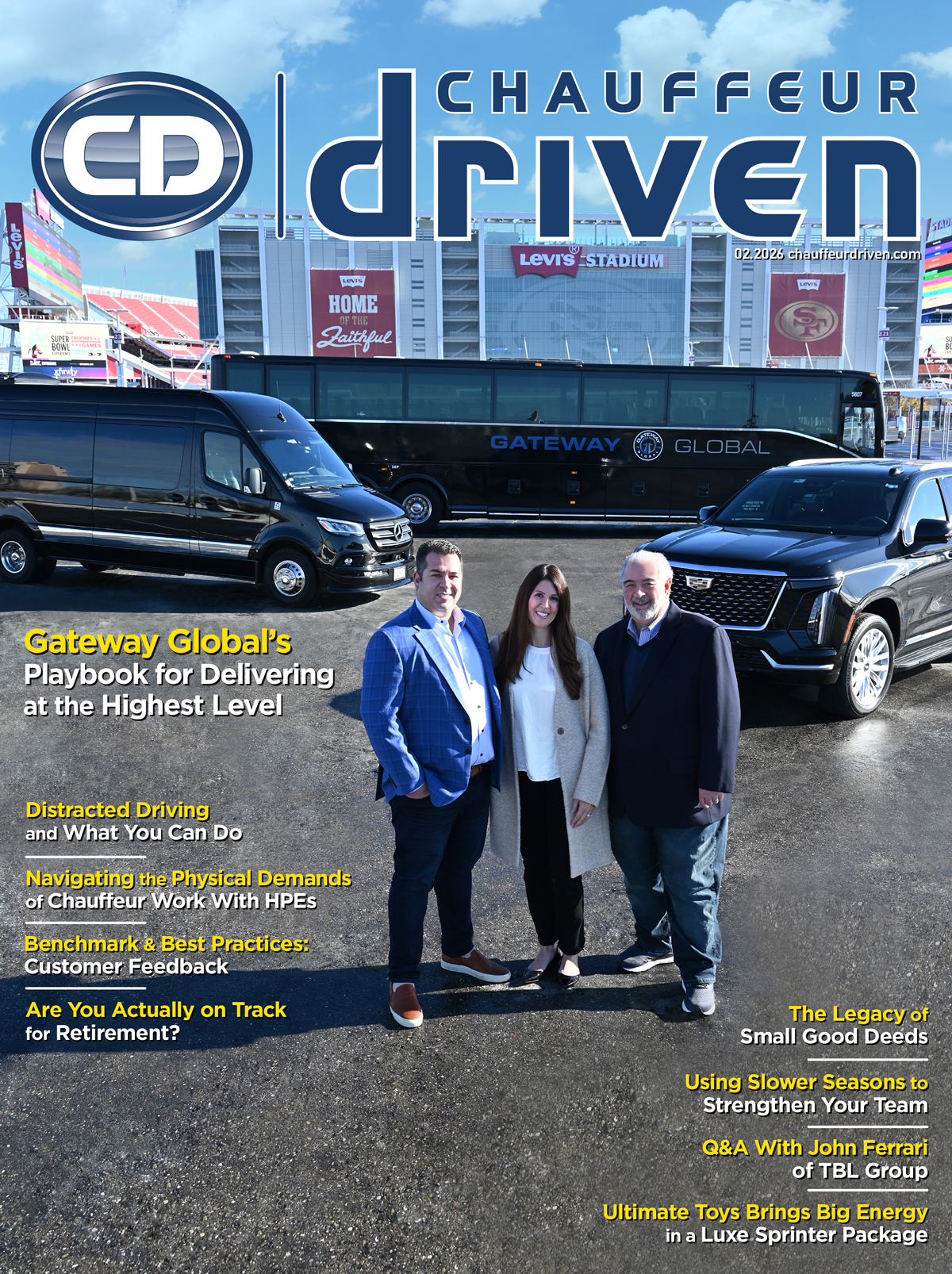
 Cover Art: L to R: Gateway Global COO Joel Amato, Finance Administrator Gina Amato Bonelli, and President Sam Amato at Levi’s Stadium, home of Super Bowl LX. Photography by Chris Weiss.
BY SUSAN ROSE
When the New England Patriots and Seattle Seahawks returned to Levi’s Stadium in Santa Clara, Calif., for Super Bowl LX, you can bet that Bay Area operation Gateway Global played a part in the world-class event.
For nearly five decades, Gateway has built its reputation on executing complex transportation programs where reliability, safety, and coordination are non-negotiable. From global sporting events to large-scale corporate group movements, the Bay Area-based operator has focused on building systems, teams, and partnerships designed to perform under pressure.
As major events such as the Super Bowl and the upcoming FIFA World Cup matches take place in the Bay Area, Gateway continues to support on-the-ground group travel for sponsors, VIPs, production teams, and corporate groups.
“Large-scale logistics are not occasional projects—they are part of the operational foundation built through years of event execution and year-round group transportation work,” says COO Joel Amato.
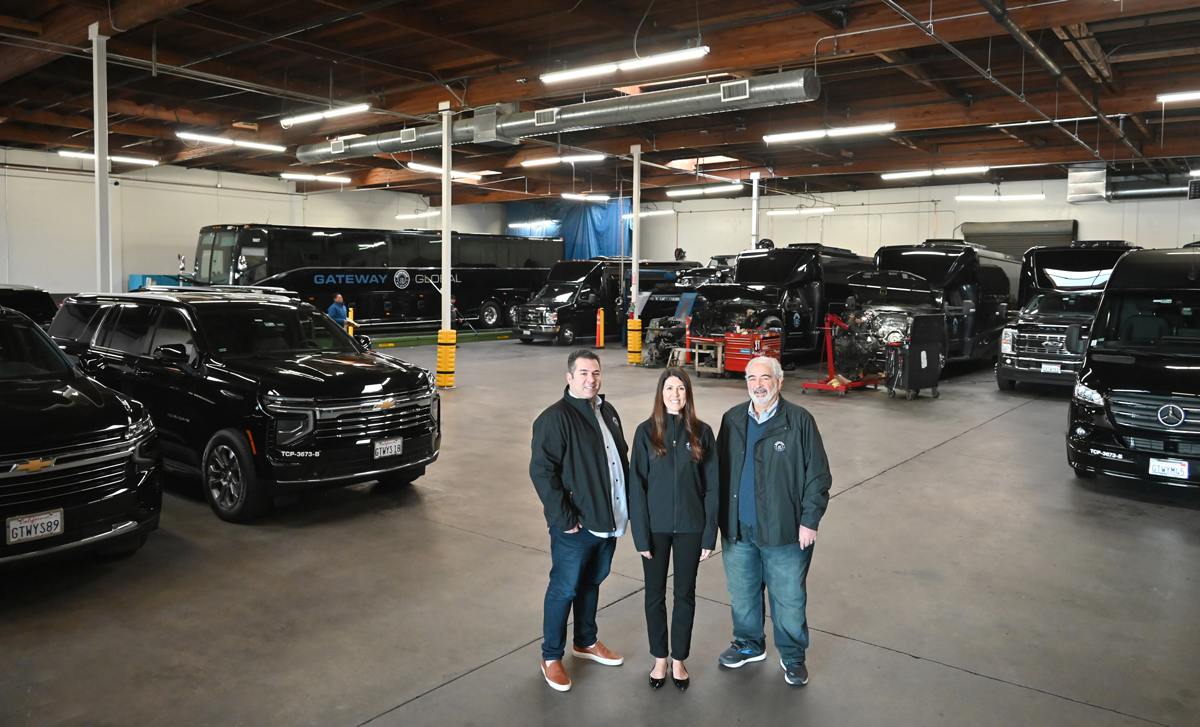 L to R: Gateway Global COO Joel Amato, Finance Administrator Gina Amato Bonelli, and President Sam Amato at the company’s new San Carlos Headquarters. Clearly, significant and globally recognized events require a different operational approach than traditional point-to-point corporate work. Gateway’s model centers on securing core group movements early, aligning fleet capacity with committed partners, and building layered contingency planning months in advance.
“There’s a lot of prep that goes into events like the Super Bowl,” says Joel. “We focus early on making sure we have the right groups lined up and our fleet positioned to support them. We concentrate on building certainty early.”
Preparation for events like Super Bowl LX often begins up to 12 months in advance, supported by long-standing relationships with sponsors, production teams, and event partners. Repeat business and referral relationships continue to drive much of Gateway’s large-event pipeline.
“It’s largely word-of-mouth and return business,” says President Sam Amato, who launched the company in 1979. “The partnerships we’ve built over the years lead to referrals and opportunities for events like this.”
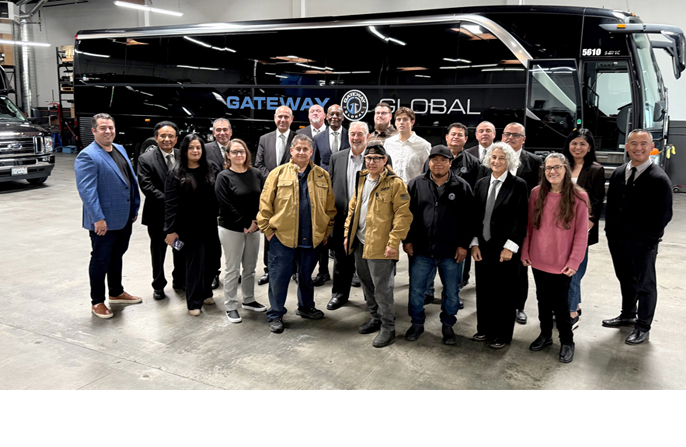
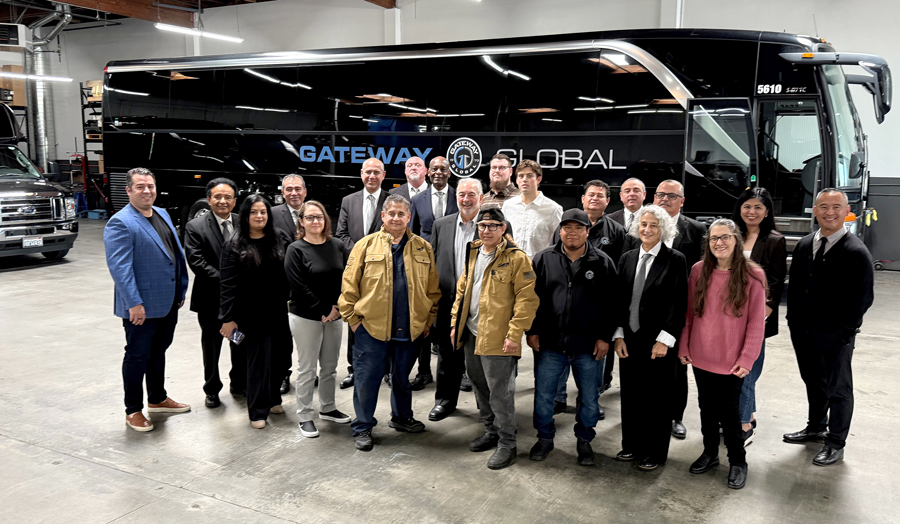 Members of the Gateway Global team (L to R): Joel Amato, Carlos Castillo, Samira Abbas, Jose Erazo, Amy Critchlow, Sherif Meshriky, Mario Hernandez, Rick Miller, Michael Inniss, Sam Amato, Juan Francisco Cruz Linares, David Del Castello, Lucca Guirlani, Marco Xiquin, Juan Carlos Cortez, Oscar Caceres, Adel Ayoub, Ligia Calonje, Kim Schliebus, Catalina Gomez, and Vincent Suarez Affiliate partnerships also play a key role. Rather than building relationships only for peak demand periods, Gateway Affiliate Manager Michael Innis, who has been with the company for over 20 years, maintains active relationships year-round.
While the Gateway team prides itself on major event execution, a significant portion of the company’s operational strength comes from programs running quietly every day. One of the most critical is Gateway’s long-standing airport shuttle program, which continues to operate from the company’s Burlingame, Calif., location. (The company recently completed its new headquarters in San Carlos. More on that later.) The shuttle operation, led by Shuttle Operations Manager Jose Erazo and his team, manages daily service performance, driver coordination, and real-time operational adjustments.
“The shuttle division is a foundational part of the company’s operational discipline—requiring the same focus on safety, consistency, and service delivery that powers large-scale event work,” says Joel.
He adds that Gateway’s ability to execute at a high level is driven heavily by the teams responsible for compliance oversight, safety programs, and fleet readiness.
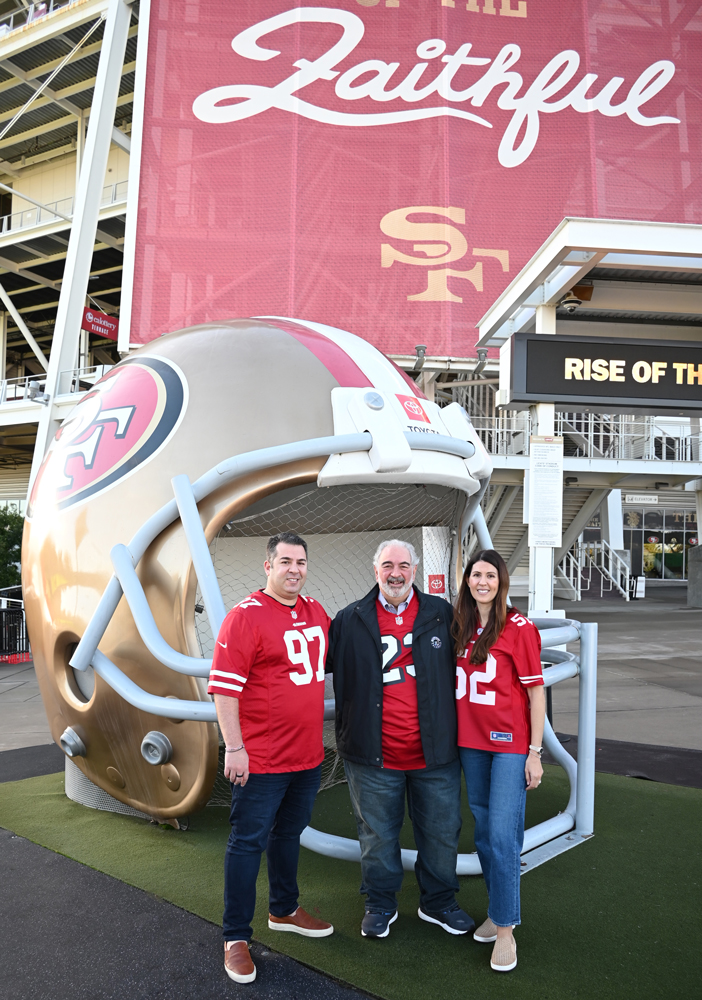 L to R: Joel Amato, Sam Amato, and Gina Amato Bonelli at the main entrance to Levi’s Stadium Compliance and safety programs are managed by Gina Amato Bonelli, who oversees regulatory compliance, driver qualification programs, safety monitoring, and internal operating standards. The team works continuously behind the scenes to ensure Gateway maintains alignment with state, federal, and local regulatory requirements.
Equally critical to the company is their maintenance and fleet team, headed by Mario Hernandez, who manages preventative maintenance scheduling, inspections, repairs, and event readiness preparation. This division ensures vehicles are prepared well before deployment to staging or service locations.
However, the Amatos say that their chauffeurs are the center of Gateway’s operation, and while much of the operational work happens out of the public’s view, the men and women behind the wheel ultimately shape each client’s experience on ever trip and event movement.
“The chauffeurs are the ones delivering the experience to the client every day,” Joel says. “Everything we do operationally is designed to support them and set them up for success.”
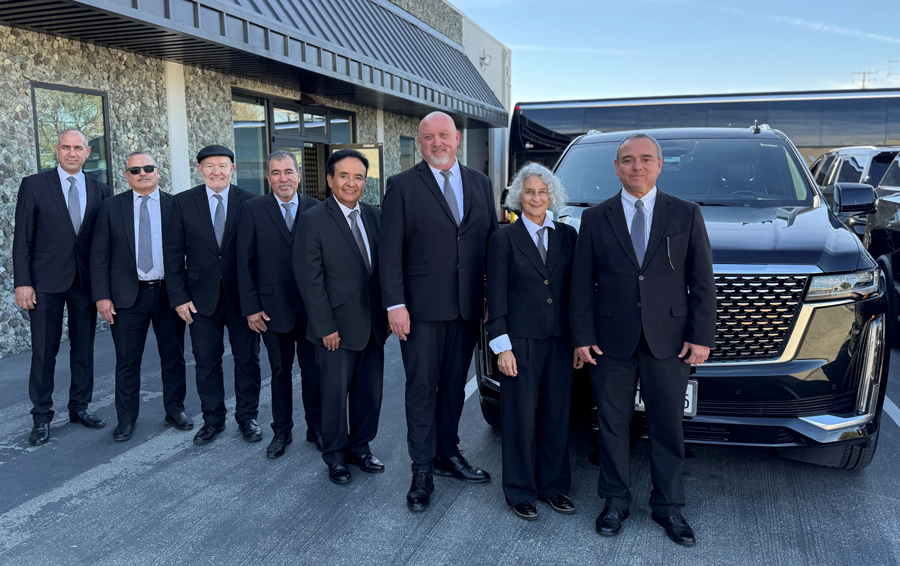 Members of the Gateway Global chauffeur team (L to R): Sherif Meshriky, Adel Ayoub, James Lilley, Jose Erazo, Carlos Castillo, Rick Miller, Ligia Calonje, and Oscar Caceres Rubio As such, Director of Chauffeur Development James Lilley has created an extensive chauffeur training program with a focus on customer service.
“Gateway places significant emphasis on recruiting, training, and supporting chauffeurs who demonstrate professionalism, safety awareness, and strong client communication skills,” says Joel.
To help augment their in-office staff—thanks to critical technology that makes it all possible—Gateway has expanded its operational capacity through a distributed workforce model supported by modern dispatch and communication technology.
The company maintains a dedicated remote operations team based in Serbia that supports dispatch coordination, trip management, monitoring, and customer service. The team operates as an integrated extension of Gateway’s core operations and works closely with leadership based in the company’s new San Carlos headquarters.
Supporting this global structure are key operational leaders including Operations Manager Amy Critchlow and Office Manager Cherry Bustamante, who coordinate with the overseas team while managing Gateway’s remote training and onboarding programs.
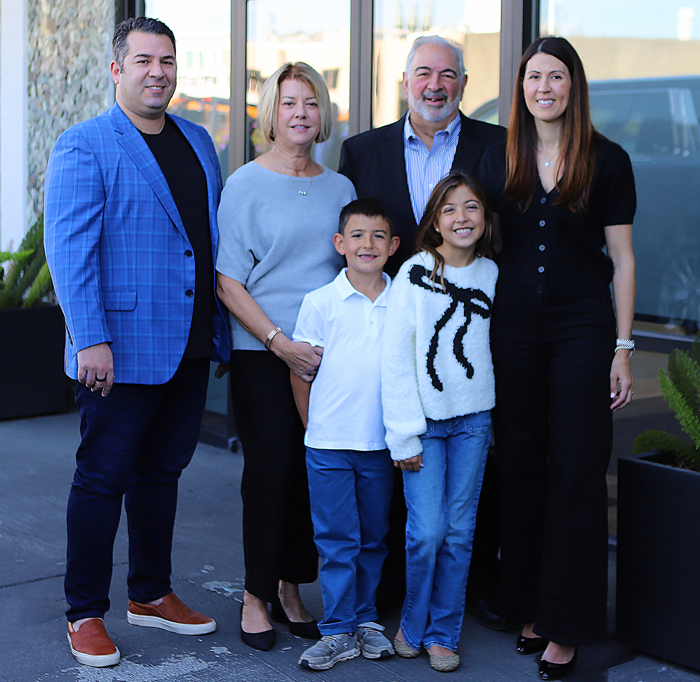 The Amato Family: Joel Amato, Karen and Sam Amato, Gina Amato Bonelli, Luca Bonelli, and Ava Bonelli Group and event transportation programs are also handled by operational team members focused on complex movement planning and client coordination. Among those are Catalina Gomez and David Del Castello, who support group logistics and large-scale event movements, helping maintain continuity between planning, client communication, and execution.
This model allows Gateway to provide extended operational coverage across time zones while preserving centralized operational oversight and service consistency.
“We’ve built systems that allow everyone to stay connected and operate as one team, regardless of location,” Joel says. “Technology has made that possible—but culture is what makes it work.”
Of course, managing an operation of this size requires a state-of-the art foundation, which began in 1979 at the Sheraton Hotel at Fisherman’s Wharf—Gateway’s home in its infancy. Gateway’s recent move into its new headquarters facility in San Carlos marked a major operational milestone for the company in its nearly five-decade history and reflects years of growth, planning, and team effort across the organization. For the Amatos, the updated HQ represents more than just a new building—it represents the collective effort of the entire Gateway team.
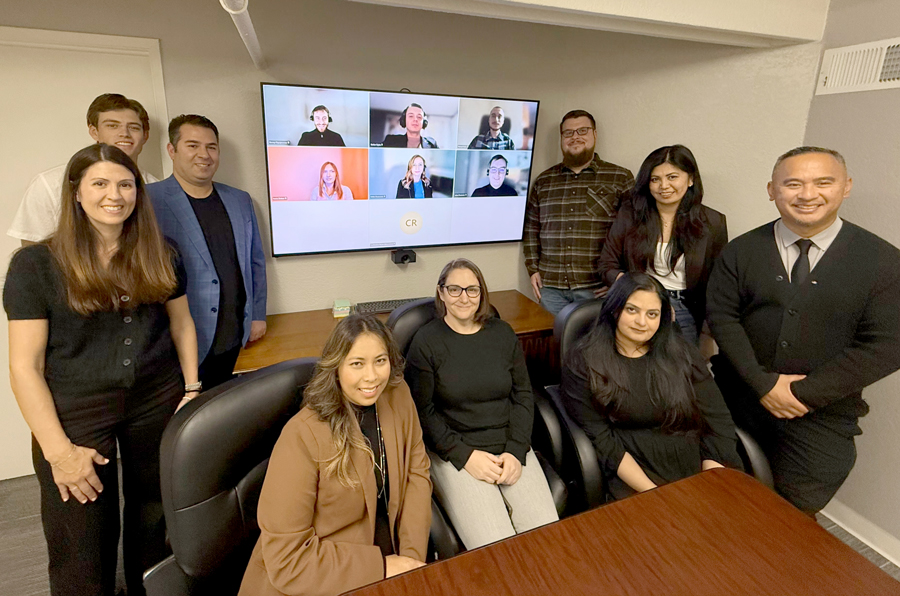 Operations, administration, and sales/events teams (L to R): Gina Amato Bonelli, Lucca Giurlani, Joel Amato, Cherry Bustamante, Amy Critchlow, Samira Abbas, David Del Castello, Catalina Gomez, and Vincent Suarez (Remote team, Serbia: Stefan Sipka, Nenad Galic, Ivana Zivkov, Millie Zivancevic, and Luka Zivanovic not pictured) and Ava Bonelli “Building the facility basically from the ground up has allowed us to use new technology and equipment to create a workflow system that is very efficient,” Joel says. “After all, the vehicles need to be in top working order and looking their best. The chauffeurs take great pride in this.”
The new facility allows Gateway to centralize key operational functions, improve workflow between departments, and invest in modern maintenance, fleet preparation, and support technology designed to improve efficiency and vehicle readiness.
“It’s a fresh and new environment. A clean, efficient workspace,” says Sam.
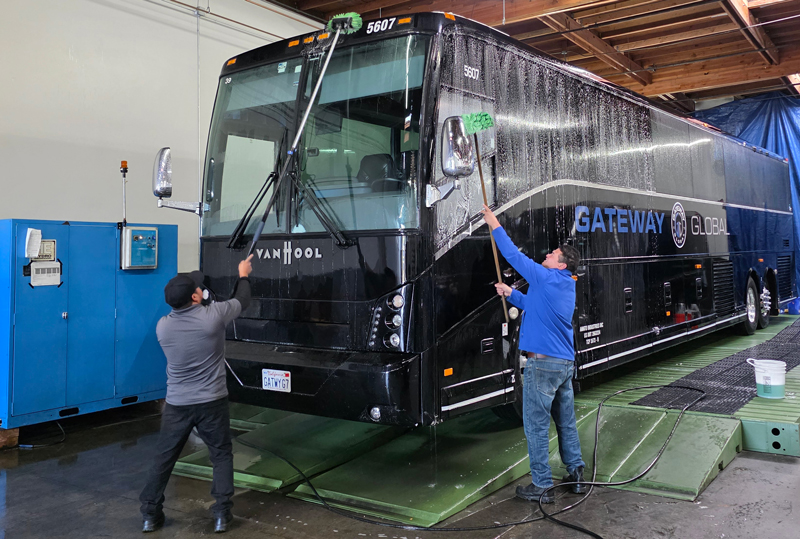 Gateway’s Detail Team, Marco (left) and Juan Carlos, prepping a motorcoach The new location also allows Gateway to provide a relaxing work atmosphere for their office staff, solidifying the company’s familial culture.
“I would say we offer kind of a close-knit family environment, and that’s how we’ve tried to keep it over the years,” says Joel.
As San Francisco sees a resurgence, thanks to the efforts of the mayor and the San Francisco Travel Association, the Gateway team is enthusiastic about the things being put into place that bring conferences, corporate travel, and major events back to the area.
“We’re absolutely seeing a bigger push in business back into San Francisco,” says Joel. “We’re seeing the results of that.”
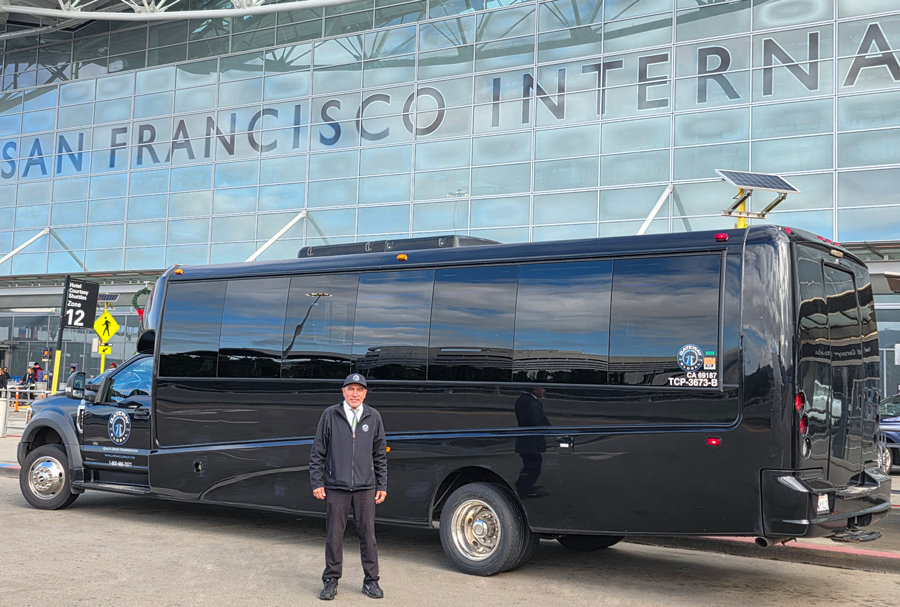 Hotel and Airport Shuttle Manager Jose Erazo at SFO International “We’re definitely seeing group requests pick up in San Francisco,” adds Sam. And with conferences and corporate events returning, the Amatos expect continued demand growth across group transportation and executive travel segments.
At its core, the Amatos say that Gateway measures success through execution consistency and team performance.
“For me, it’s about being perfect in an imperfect situation,” Joel says. “There are a lot of moving pieces every day—it’s like solving a puzzle.”
Sam summarizes the company’s philosophy simply: “We take satisfaction in driving the people who drive the economy of the world. We pride ourselves on being the best.” [CD0226]
